Evidence of Tibet as an Independent State before Chinese Colonization
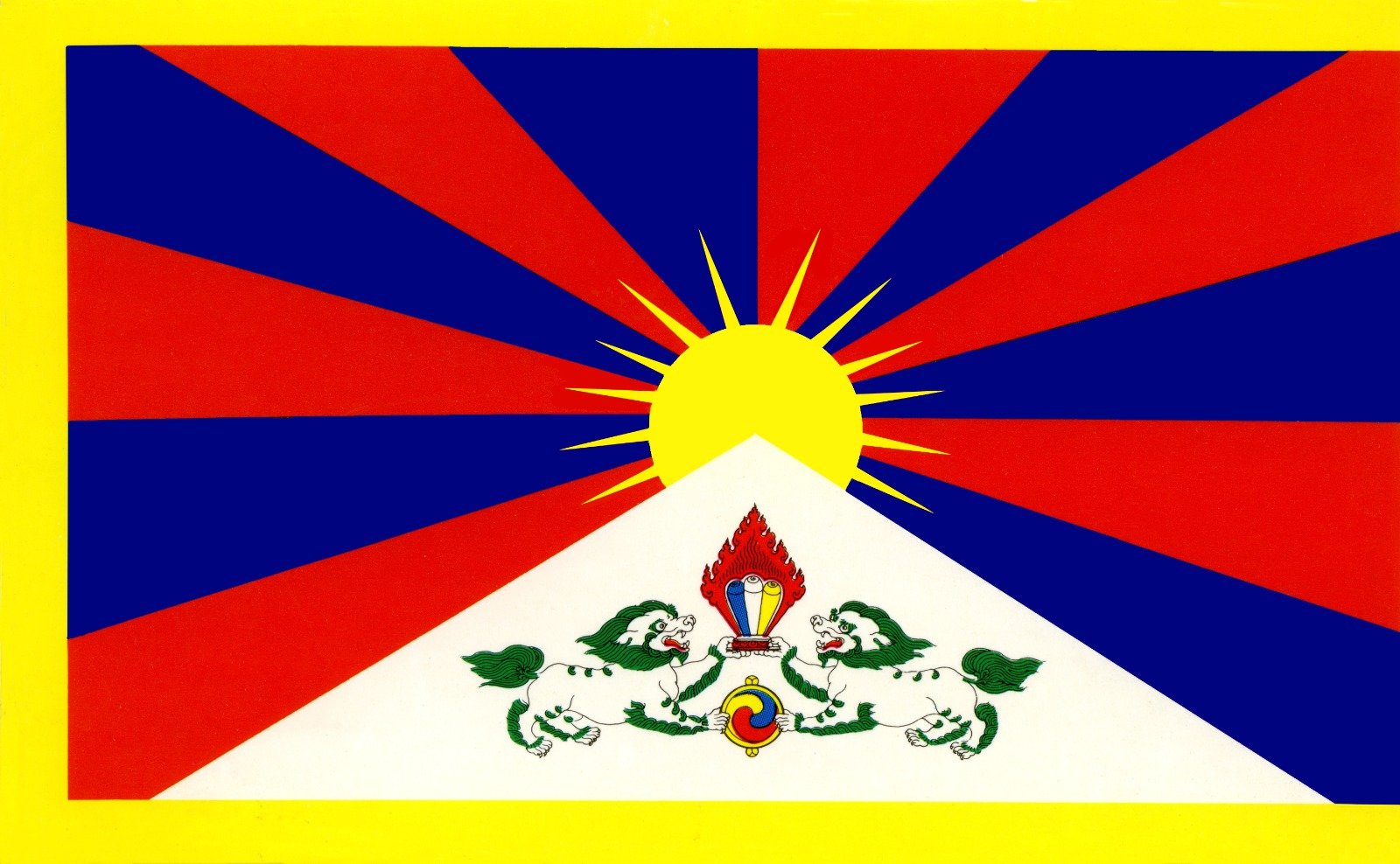
Prior to 1950, Tibet functioned as a de facto independent state following the 1912 collapse of the Qing dynasty, exercising full control over its internal affairs without Chinese interference until the People's Liberation Army's advance. It met the core criteria for statehood outlined in the 1933 Montevideo Convention on the Rights and Duties of States: a permanent population of ethnic Tibetans; a defined territory encompassing Ü-Tsang and parts of Kham and Amdo; an effective government under the Ganden Phodrang regime led by the Dalai Lama, which maintained law, administration, and a national army; the capacity to enter into international relations, evidenced by issuing its own currency, postage stamps, and passports (accepted by several countries), signing treaties (such as the 1914 Simla Accord with Britain), and conducting diplomacy with neighbors like Nepal, Bhutan, and India; and a distinct national flag—the Snow Lion Flag, adopted around 1916 by the 13th Dalai Lama, featuring two snow lions, a snowy mountain, rising sun with rays, and symbolic jewels, used by the military, government, and recognized internationally in flag books and publications from the 1920s onward.
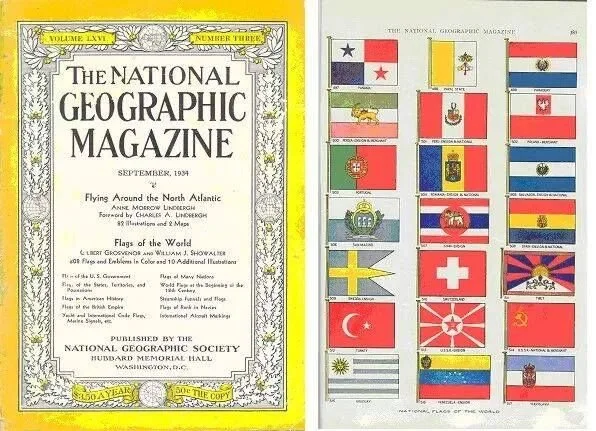
Tibetan Flag Featured in 1934 the National Geographic Magazine
The September 1934 issue of National Geographic Magazine (Vol. LXVI, No. 3) featured the article "Flags of the World" by Gilbert Grosvenor and William J. Showalter. This article included the Tibetan national flag among the flags of 77 independent countries, treating Tibet as one without qualifiers like "protectorate" or "mandate" (unlike some others, e.g., Cambodia as a French protectorate).
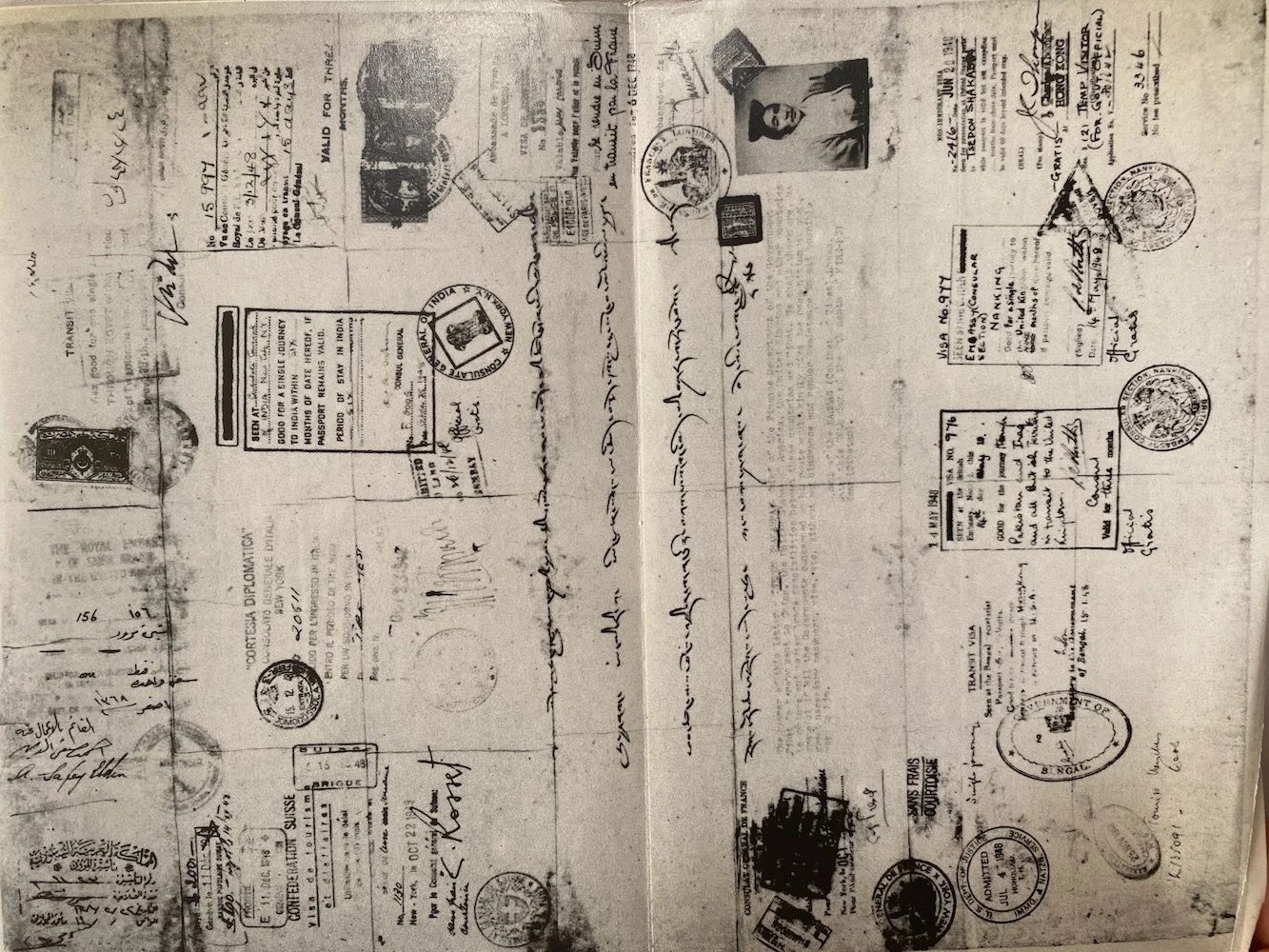
Tibetan Passport Issued by the Tibetan Government
A 1947–1948 Tibetan passport issued by the Tibetan government This is one of the clearest symbols of sovereignty, as it was accepted by several countries (including India, the UK, and the US) and bears the official Tibetan government seal.
The Tibetan National Flag
The Snow Lion Flag originated from ancient Tibetan military banners featuring snow lions as symbols of strength and fearlessness, dating to the 7th-century empire.
The modern design was standardized by the 13th Dalai Lama around 1916, unifying traditional regimental flags for the army and government during Tibet's de facto independence.
It was flown officially until 1959, when banned after Chinese annexation, and remains a key symbol of Tibetan identity today.
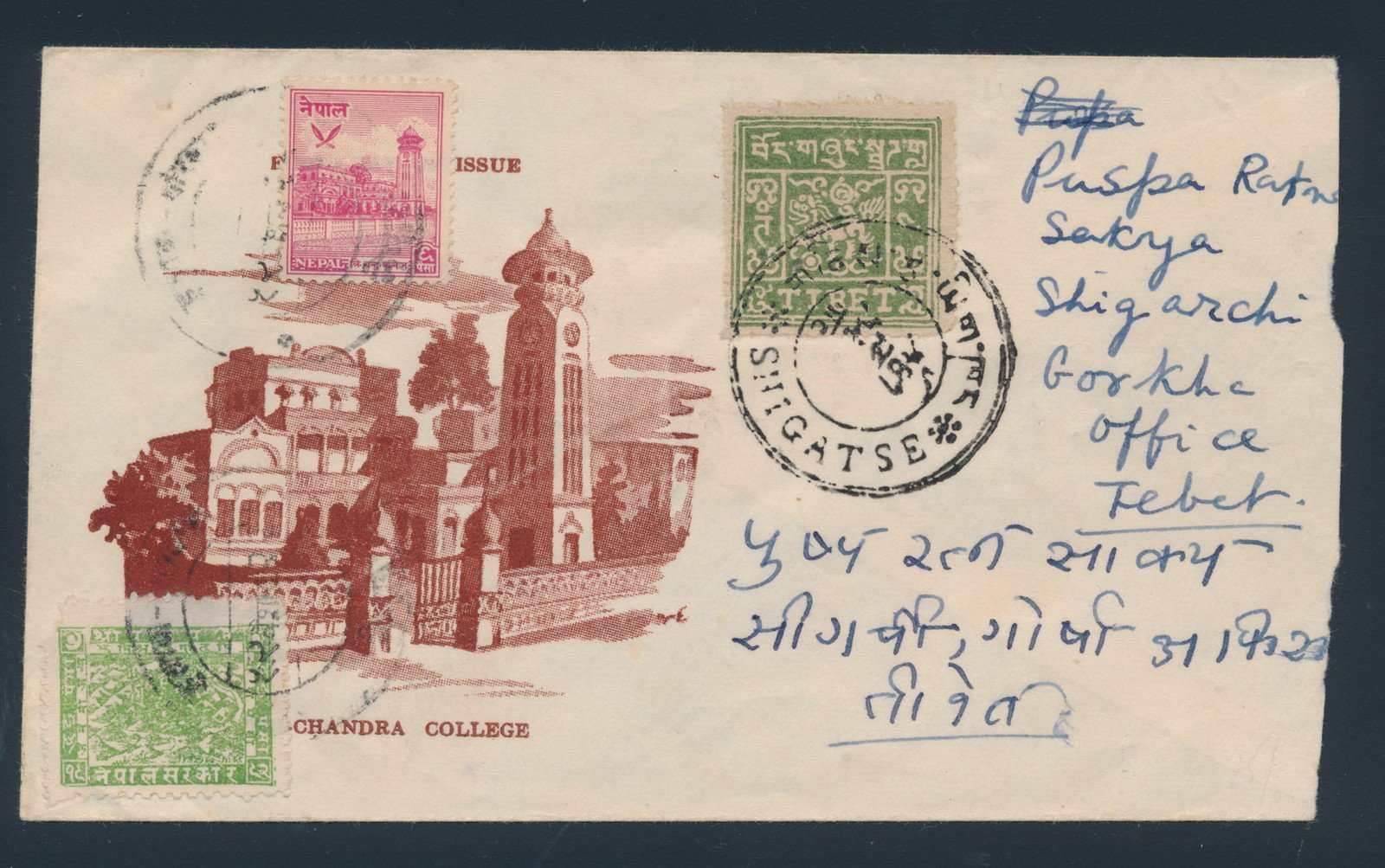
Historical Tibetan Postage Stamps (Pre-1950 Era)
During its independence from 1912 to 1950, Tibet operated its own postal system with post offices in Lhasa, Gyantse ("Paxta Pustapa"), Shigatse ("Shigargar"), and others, issuing distinctive stamps featuring Tibetan motifs like lions and script for domestic mail. This envelope exemplifies their use: franked with a genuine green Tibetan postage stamp (likely 1 skor or similar issue from the 1930s, featuring intricate Tibetan designs), canceled by a bilingual "TIBET GATES" postmark from the Gyantse office—alongside a "SHIGATSE" registration handstamp—addressed internally to the Shigatse Post Office ("Gorskhkhe Office") in Tibetan script, dated around February 1932 (per Devanagari numerals "31 1928" in the Bikram Samvat calendar, equivalent to ~Feb 1932 Gregorian). Nepal stamps and Chandrakoti College markings indicate handoff at the Nepal border for any external routing, underscoring Tibet's sovereign internal postal sovereignty as per historical records from sources like Wikipedia and philatelic studies.
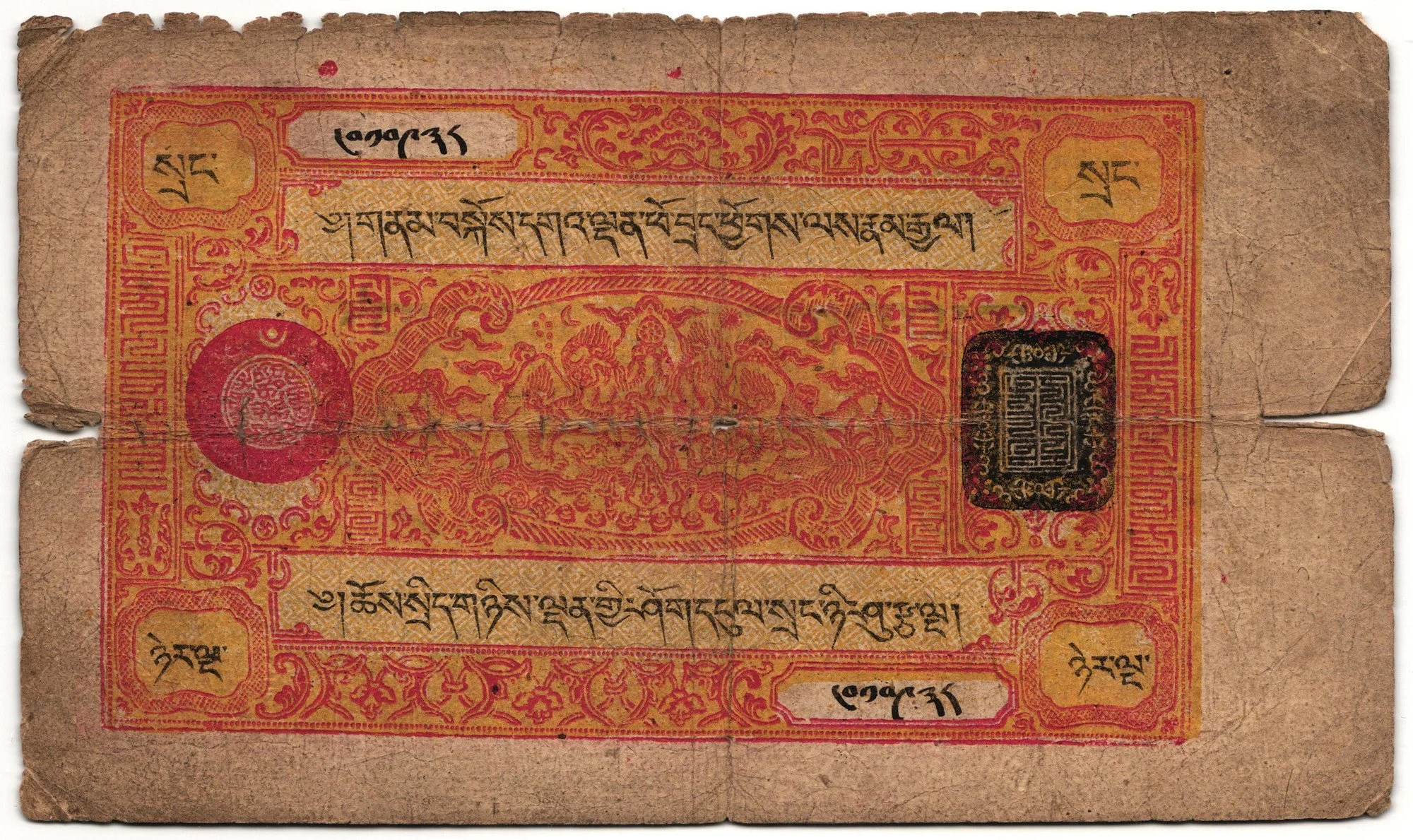
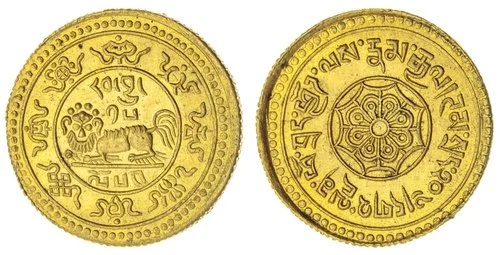
Historical Tibetan Currency (Banknotes and Coins
Tibet issued its paper banknotes (in srang denomination) starting in the early 20th century, along with the coins like tam sang